The EnviroSafe Mosquito Larval Trap - tackling mosquito wrigglers in your backyard
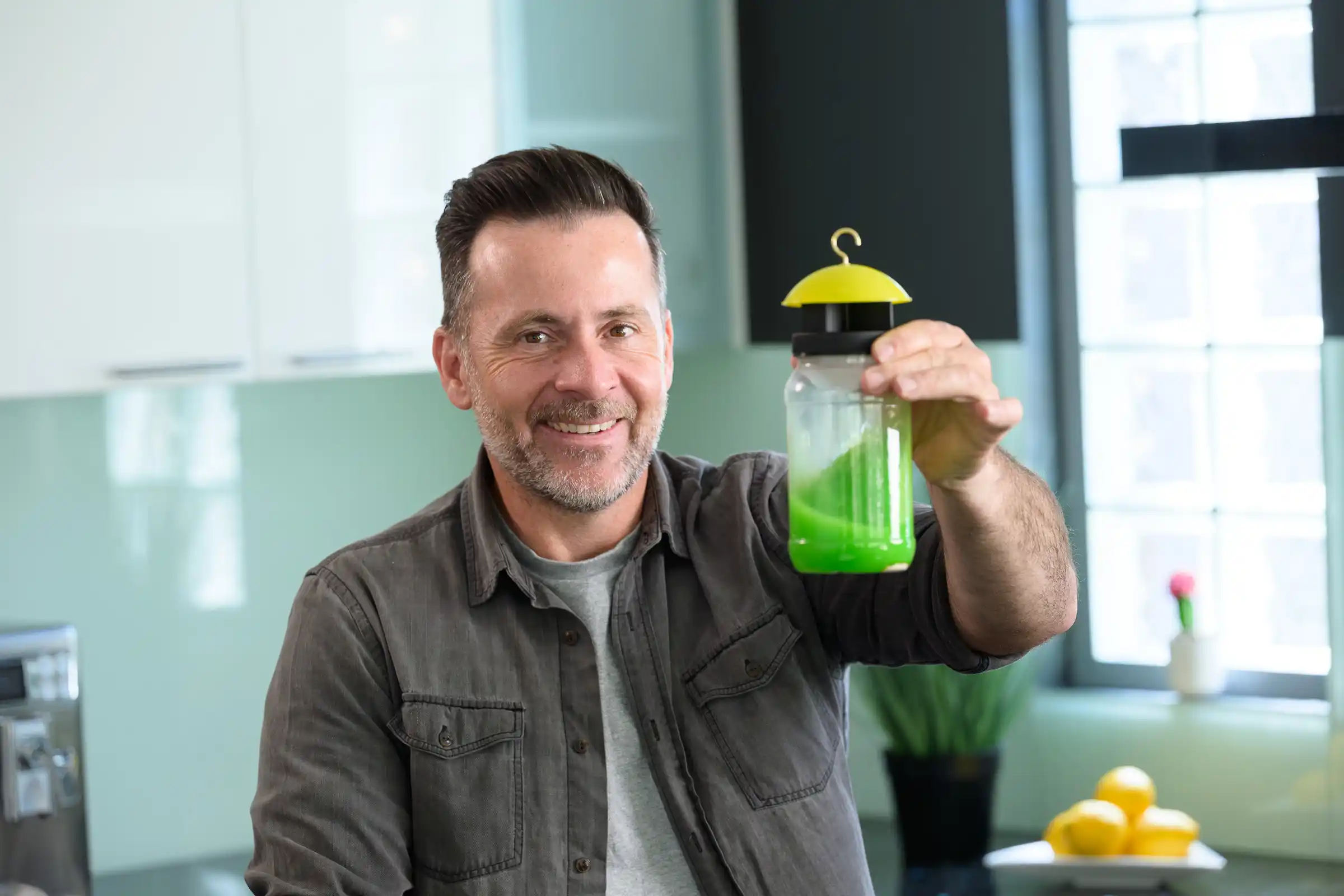
Australia's warm climate and diverse environment make it a prime breeding ground for mosquitoes. Beyond being an annoyance, mosquitoes in Australia can spread diseases like Ross River virus, Japanese encephalitis virus and Barmah Forest virus. While sprays and zappers target adult mosquitoes, more mosquitoes keep emerging to take their place. The EnviroSafe Mosquito Larval Trap provides an eco-friendly solution that targets mosquitoes at the stages of the lifecycle that live in water, effectively helping to reduce their populations.
The Mosquito Lifecycle
Mosquitoes begin their life as eggs laid in or near standing water, where they hatch into larvae. These larvae, commonly known as wrigglers, swim around in the water with a vigorous side to side motion, breathing at the water’s surface and feeding on organic matter in the water.
They go through several growth stages before becoming pupae. During the pupal stage, the mosquito transforms into an adult which then emerges from the water to find a blood meal and continue the breeding cycle. The EnviroSafe Mosquito Larval Trap focuses on the aquatic stages, trapping the larvae and pupae and preventing them from escaping as adults that can lay more eggs, effectively breaking the mosquito lifecycle and reducing the overall population.
How Does the EnviroSafe Mosquito Larval Trap Work?
The EnviroSafe Mosquito Larval trap is designed to interrupt the mosquito life cycle by attracting female mosquitoes to lay their eggs in a controlled environment.
1. Attracting Female Mosquitoes:
Mosquitoes lay their eggs in standing water, and the trap’s bucket of water with its booster tablet serves as an ideal lure. This is particularly effective for container-breeding species like the yellow fever mosquito, Aedes aegypti and brown house mosquito Culex quinquefasciatus, which are common in Australia and adapted to lay eggs in small water sources around the home, such as plant saucers and buckets.
2. Trapping the Larvae:
Once the mosquito eggs hatch, the larvae swim down through a cone-shaped opening in the lid. Another plastic ring of cones inside the bucket traps the larvae as they ascend to breathe. Caught inside the bucket, they are unable to escape and eventually die, breaking the mosquito life cycle.
3. Preventing New Generations:
Because the larvae can’t escape the trap, new generations of mosquitoes are prevented from emerging, reducing the number of adult mosquitoes in the local population. The EnviroSafe Mosquito Larval Trap offers an effective and sustainable way to control mosquitoes around the home. This eco-friendly solution targets only mosquitoes without the need for chemicals, making it safe for use around pets, kids, and beneficial insects. Tuck it in among your pot plants or nestled in the greenery of your garden.
After setup, the trap requires minimal upkeep. Just keep the bucket topped up, and from time to time, clear out any debris that may fall in the water and clog up the hole at the bottom of the cone in the lid. We recommend changing the water and adding a new booster tablet once a month. The larvae can be hard to see in the trap, but when you open the lid, you will see the remains of wrigglers and pupae that were trapped in the bucket.
Mosquito larval traps are most effective when used across neighbourhoods. Imagine each home deploying one or two traps—mosquito breeding would be substantially impacted, leading to fewer bites and lowering the risk of mosquito-borne disease in the area. With each trapped batch of larvae, you eliminate a number of potential breeding adults, producing a cumulative reduction in local mosquito populations.
For Aussies looking for a sustainable approach to mosquito control, EnviroSafe Mosquito Larval Traps are the ideal choice. By stopping container-breeding mosquitoes at the larval stage, you can make a long-term impact on mosquito populations, creating a safer, more comfortable environment for your family and community. Set up your Mosquito Larval Trap today and take a proactive step toward a mosquito-free life!
When you see a house fly walking around on your kitchen window, do you ever wonder where it came from or where it has been? You might just whip out the fly swat and be done with it because everyone knows that you don’t want flies in the house. But are they just a nuisance, or is there something more to the deep-seated revulsion that we feel towards flies?
The house fly, Musca domestica is the most common and widespread species of fly in the world. It is thought to have originated on the steppes of central Asia, but is now present in a wide variety of environments from rural to urban, and in all climates from tropical to temperate [1].
The house fly is considered a “filth fly” due to its association with manures and household waste. It has developed a particularly close association with humans, and is able to complete its entire lifecycle within housing belonging to people or their domestic animals House flies are also abundant in other areas of human activity such as food markets, restaurants and cafes, and hospitals, as well as slaughterhouses and livestock farms where they can become a particular nuisance and pose problems of disease transmission.
Where did that house fly come from?
That adult fly you see buzzing around your house has been through three earlier life stages: egg, larva and pupa.
Female house flies lay eggs in moist microbe-rich decaying organic matter such as compost, rubbish, soiled bedding, rotting food or manure. They typically lay about 100 – 150 eggs at a time and can produce several batches of eggs in their lifetime.
The eggs hatch within a day, and the larvae feed for between 3 to 14 days depending on temperature and the richness of the food source. When the larvae stop eating, they migrate to a dry, dark place to pupate.

The pupae develop a tough outer envelope around them called the puparium. Inside this, the pupa transforms into an immature fly which breaks out of the puparium after about 5 days.
The whole lifecycle can be completed in as few as 8 days under ideal conditions, but usually ranges from 10-21 days. Adults usually live 2 – 3 weeks in summer, but this lifespan can extend to several months during the cooler months of spring and autumn.
House fly larvae flourish in filth
The house fly’s relationship with bacteria starts right at the very beginning – when the eggs are laid. At egg laying, the females add a bit of bacteria for good measure, possibly to deter other females from laying their eggs in the same place, or as a “starter” food for the tiny hatchlings [2]. The eggs can be laid into any of a wide range of rotting organic materials (eg plant or animal material or manure or waste) and it’s the microbes and their by-products that become the food for the larvae [3], not the organic material itself. That microbial community changes rapidly as the rotting takes place, causing changes to water content, pH and oxygen availability, and yet the house fly larvae thrive. For them, it’s a veritable feast! Studies have found that while most of the microbes consumed by the larvae are digested, some manage to survive the pupation period, and are still alive on the fly surface or in their gut when the adult emerges [4].

House fly adults as microbial carriers
In the late 1800s and early 1900s, public health studies of conditions in the Boer War and around the docks of New York Harbor showed that outbreaks of typhoid fever could be correlated with fly population numbers, and bacteria could be cultured from flies [5]. Since then, public health campaigns around the world have worked to inform people about the need to control flies using advertising and posters like the one illustrated here [6].
Studies have shown that flies can carry and transmit diseases in several ways: on their mouth parts, through their vomitus, on their body and leg hairs, on the sticky pads of their feet and through the intestinal tract when they pass faeces. Over 100 pathogens, including bacteria, fungi and parasites, have been associated with house flies [7].
It’s their tendency to travel between areas of filth, such as garbage bins which may contain used nappies, dog waste or rotting animal and plant material, and then enter houses to feed on any exposed foods that makes flies the ideal carrier for microbes. Environmental sanitation has improved significantly over the years and we now have effective sewage treatment plants and regular rubbish collection. But flies are opportunists and can reproduce incredibly quickly when they find a suitable breeding source. And we humans still tend to provide those conditions in our back yards – an overflowing bin or open compost heap here, dog or chicken waste there… Even if our own backyard is scrupulously clean and tidy, the flies can fly in from the neighbours place or the local tip miles away.
It wasn’t long ago that flies were considered by some to be “the most dangerous animal on earth” due to their ability to transmit diseases. Perhaps that’s why we are so quick to reach for the swat. Even though generally, environmental hygiene is so much better now, it still makes sense to do whatever we can to reduce their numbers and keep them out from our homes.
Follow these tips to help prevent a house fly infestation:
- Ensure kitchen bins have lids and are kept as clean as possible
- Keep kitchen benches and other surfaces clean
- Eliminate leaks and other sources of excess moisture
- Dispose of waste regularly and store outdoor bins away from your home.
- If you have dogs, horses or other domestic animals, remove and dispose of faeces regularly.
- Set outdoor fly traps near your bins or other areas such as compost bins or manure heaps where flies may accumulate.
- Keep doors, windows and vents closed whenever possible, or ensure mesh screens are fitted and in good condition.
Bibliography
| [1] | H. Sanchez-Arroyo and J. L. Capinera, “House fly, Musca domestica Linnaeus (Insecta: Diptera: Muscidae),” Institute of Food and Agricultural Sciences (IFAS) Extension, University of Florida, pp. 124-230, June 2014. |
| [2] | K. Lam, C. Geisreiter and G. Gries, “Ovipositing female house flies provision offspring larvae with bacterial food.,” Entomologia Experimentalis et Applicata, pp. 292-295, 2009. |
| [3] | D. Nayduch and R. G. Burrus, “Flourishing in Filth: House Fly – Microbe interactions across life history,” Annals of the Entomological Society of America, vol. 110, no. 1, pp. 3-18, 2017. |
| [4] | K. Zurek and D. Nayduch, “Bacterial Associations Across House Fly Life History: Evidence for Transstadial Carriage From Managed Manure,” Journal of Insect Science, vol. 16, no. 1, p. 2, 2016. |
| [5] | E. Hatch Jr., “The house fly as a carrier of disease,” The Annals of the American Academy of Political and Social Science, vol. 37, no. 2, pp. 168-179, 1911. |
| [6] | Museum of Applied Arts and Sciences, “Flies have dirty feet”, Sydney: VCN Blight, Public Printer, NSW Department of Public Health, c. 1955. |
| [7] | F. Khamesipour, K. B. Lankarani, B. Honarvar and T. E. Kwenti, “A systematic review of human pathogens carried by the housefly ( Musca domestica L.),” BMC Public Health, vol. 18, no. 1, p. 1049, 2018. |